
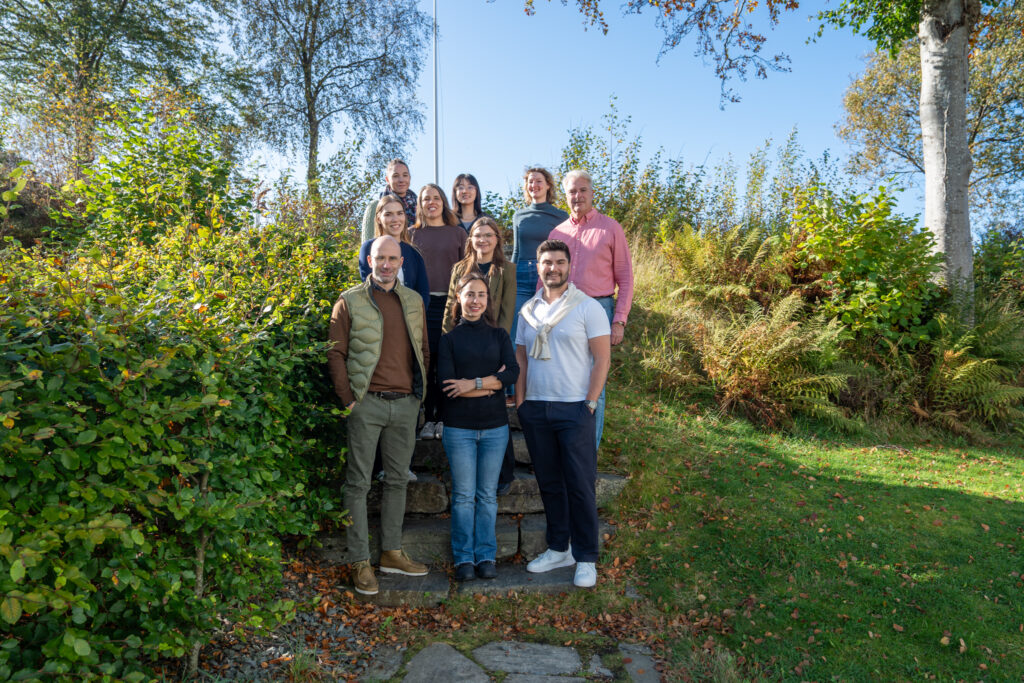
By Björn Schmeisser & Ina-Cristine Helljesen
Many research projects begin with strong ideas, but turning those ideas into convincing empirical evidence is often easier said than done. Last week, eight doctoral researchers from across Europe came to NHH to work on exactly that challenge.
The EEU 512 ENGAGE.EU Workshop on Linking Theory and Empirics brought together PhD researchers from across Europe for a week of intensive learning and collaboration. Led by Björn Schmeisser (NHH, SOL) and Jan Hendrik Fisch (WU Vienna), the course focused on helping participants strengthen the connection between theoretical arguments and empirical testing.
From ideas to evidence
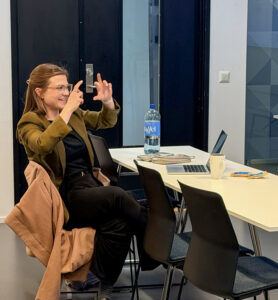
Throughout the week, participants explored three critical links for establishing a strong fit between theory and empirics: problem-theory, theory-model, and model-data. “The course gave me time to step back and identify the concepts that really matter in my study,” said Katharina Viethen from the University of Mannheim.
Together, participants examined key concepts and constructs, translated theoretical mechanisms into testable relationships, and reflected on whether their research models were sufficiently rigorous while remaining focused and manageable. “I had never thought about these links so explicitly,” said Farnaz Sarrafi from Toulouse Capitole University.
Sirine Royer added: “The three links and the detailed feedback we received over the week made me much more confident about my research.”
Learning through collaboration
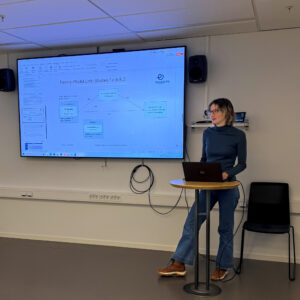
The intensive workshop combined lectures, self-study, model development, coaching sessions, and participant presentations. A central feature of the course was the opportunity to receive detailed feedback from faculty members and peers representing different research disciplines and methodological traditions.
Participants left Bergen with stronger research projects, clearer research directions, and new connections across Europe. The workshop illustrates how ENGAGE.EU brings together early-career researchers to exchange ideas, challenge assumptions, and develop their work across institutions and national borders.